
Autumn brings cool weather, changing leaves, and cozy evenings indoors. However, as temperatures drop and fall storms approach, season-specific conditions can expose homes to unexpected damage. High winds, heavy rainfall, freezing temperatures, and falling debris present real risks to roof structures, plumbing, and building foundations.
Taking time for routine home maintenance each fall is one of the most effective ways to protect your property investment and avoid costly repairs down the road. Addressing minor wear and tear now helps minimize the likelihood of major property damage when severe weather strikes.
Here are four essential fall maintenance tasks to add to your seasonal checklist.
Clean Gutters and Downspouts
Falling leaves, twigs, and organic debris quickly collect in roof gutters during autumn. When water cannot flow freely through the drainage system, it backs up onto the roof line or pools around the foundation.
-
- The Risk: Clogged gutters can lead to water seeping under shingles, damaging fascia boards, or penetrating foundation walls. During freezing weather, trapped water turns into heavy ice dams that can pull gutters completely away from the structure.
- Action Steps:
- Clear out all accumulated debris from gutters and downspouts.
- Flush gutters with a hose to test water flow and check for leaks.
- Verify that downspouts extend at least three to four feet away from your foundation wall to direct water away from the building structure.
Inspect Roof Shingles and Flashing
Roofing materials take a beating from summer heat and severe seasonal weather. Fall provides an ideal opportunity to review your roof’s condition before winter rain, wind, and ice arrive.
-
- The Risk: Damaged, loose, or missing shingles create direct pathways for moisture penetration. Over time, subtle roof leaks damage insulation, ceilings, and internal support beams before becoming visible inside the living area.
- Action Steps:
- Conduct a visual inspection from the ground using binoculars, or hire a qualified roofing technician.
- Look for cracked, curling, or missing shingles, as well as worn seal strips around chimneys, vents, and skylights.
- Arrange prompt repairs for any damaged roofing components to maintain a proper weather barrier.
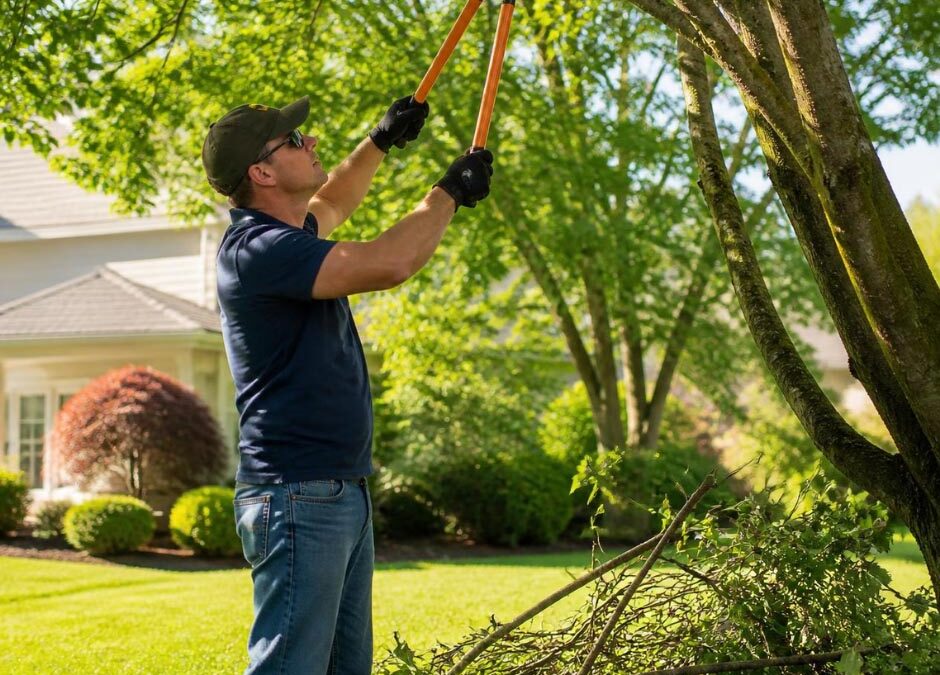
Trim Dead Tree Limbs
Fall and winter storms often bring heavy wind gusts, freezing rain, and ice weight. Overhanging branches pose a direct threat to surrounding structures and overhead power lines.
-
- The Risk: Weak or dead branches can break off in storms, dropping heavy wood onto roofs, windows, vehicles, or siding.
- Action Steps:
- Inspect trees surrounding your property for dead, decaying, or hollow branches.
- Prune limbs that hang directly over the home’s roofline or touch exterior walls.
- Contact a certified arborist to handle large limbs or trees located near utility lines safely.
Service Your Heating System
Your furnace or heating system works continuously through the colder months. Preparing heating equipment before turning it on for the season keeps systems running efficiently and safely.
-
- The Risk: Neglected heating systems operate inefficiently, leading to higher fuel bills, sudden mechanical breakdowns, or potential safety hazards like carbon monoxide accumulation.
- Action Steps:
- Replace or clean furnace air filters before starting the system for the season.
- Schedule an annual inspection and tune-up with a licensed HVAC technician to check heat exchangers, burners, and exhaust vents.
- Test all carbon monoxide detectors and smoke alarms throughout the home, replacing batteries as needed.
Protecting What Matters Most This Season
Seasonal home maintenance plays a major role in keeping property safe and functional throughout every season. While proactive care reduces the chance of preventable property damage, unexpected events can still occur.
Reviewing your home insurance policy regularly helps confirm that your coverage limits match your current property value and structural updates. Contact our local team today to review your existing policy, discuss endorsement options, or answer questions about your property protection needs.
Fall Maintenance FAQs
How often should gutters be cleaned during the fall?
It is generally recommended to clean gutters at least twice during the fall season—once in early autumn as leaves begin falling and once in late fall after trees have cleared their canopy.
Does home insurance cover damage caused by falling tree branches?
Standard homeowners insurance policies typically provide coverage for sudden and accidental wind or storm damage caused by falling branches. However, policies generally exclude coverage for damage resulting from long-term neglect or unaddressed rot.
Why is an annual HVAC inspection necessary if the furnace seems to work?
Professional HVAC inspections identify hidden mechanical issues, cracked heat exchangers, or ventilation obstructions that are not obvious during daily operation, helping maintain heating system efficiency and operational safety.